Feather wallet Is a Monero desktop wallet overview
Feather wallet Is a free, open-source desktop wallet for Monero users who want a lightweight graphical app for sending, receiving, storing, and managing XMR. It is built for Linux, Tails, Windows, macOS, and related privacy-focused environments, with practical features such as wallet synchronization, subaddresses, transaction history, Tor support, and payment proofs. Before using Feather wallet with real funds, verify downloads through official sources and understand that cryptocurrency transactions are irreversible.
Feather wallet is best understood as a focused Monero tool rather than a general crypto account. It does not try to hold every asset or connect to every chain. Its purpose is narrower: help a user control Monero keys, connect to the Monero network, create transactions, and keep enough local wallet data to understand balances and history. That narrower scope is part of the appeal for people who want a desktop XMR wallet with fewer distractions.
Feather wallet also sits in a useful middle ground. The official Monero CLI wallet is powerful but can feel technical, while the official Monero GUI wallet is broader and more traditional. Feather wallet aims to feel small, fast, and familiar, with a layout that resembles established desktop wallet software. It can suit a daily driver setup, a privacy-conscious workstation, or an advanced workflow that uses remote nodes, Tor, I2P, or offline signing.
What is Feather wallet?
Feather wallet is a desktop application for Monero, the privacy-focused cryptocurrency commonly identified by the ticker XMR. Monero uses different wallet concepts than transparent blockchains: addresses are not simple public account pages, incoming payments require scanning the chain with wallet keys, and transaction details are intentionally private by design. Feather wallet gives those concepts a graphical interface so users can manage XMR without typing wallet commands for ordinary tasks.
Feather wallet is open source, and its development has been tied to the Monero community. That matters because wallet software handles private keys, seed phrases, transaction construction, node communication, and local wallet files. Open source code does not automatically make a wallet safe, but it allows technical users and reviewers to inspect how the software works. Users should still download Feather wallet only from official channels and compare signatures or hashes when possible.
Feather wallet is not a bank, exchange, brokerage account, or recovery service. If a user loses the seed phrase or deletes the keys file without a backup, there may be no practical way to recover funds. If a user sends XMR to the wrong address or to a fraudulent payment page, the transaction cannot simply be reversed. Feather wallet gives control, and that control comes with responsibility.
How does Feather wallet work with Monero?
Feather wallet works by creating or restoring a Monero wallet, storing encrypted wallet files on the user’s computer, and connecting to a Monero node to scan the blockchain. The wallet does not need to reveal a public balance page, because Monero balances are discovered by using wallet keys to identify outputs that belong to the user. Synchronization is therefore a normal part of using Feather wallet.
Feather wallet can use remote nodes, and advanced users may choose their own node depending on privacy, reliability, and trust assumptions. A remote node helps the wallet learn about blocks and submit transactions, but the wallet still keeps the user’s spend authority locally. People with stronger privacy needs may prefer a personal node, Tor routing, I2P routing, or a carefully chosen remote node. The right setup depends on threat model, bandwidth, storage, and experience.
Feather wallet also supports Monero wallet features that experienced users expect, including accounts, subaddresses, contacts, transaction details, and payment proofs. Subaddresses are especially useful because they let a user receive payments without reusing the same visible address every time. Address reuse can weaken privacy habits, even on a privacy coin, so a wallet that makes subaddresses convenient can help users operate more carefully.
How do you get started with Feather wallet?
Feather wallet setup usually begins with choosing the correct build for the operating system. At the time this page was written, the official release page listed version 2.8.1, but software releases change, so users should verify the current version with the project’s official site before installing. The safest workflow is to avoid search-result ads, copied download links, random mirrors, and unsolicited installation files.
Feather wallet installation should include authenticity checks when the user is able to perform them. That can mean checking a PGP signature, comparing a signed hash list, or confirming that the signing key comes from the project’s official repository. These steps feel tedious, but they reduce the risk of installing a modified wallet that could steal a seed phrase or redirect transactions.
Feather wallet then asks the user to create a new wallet or restore an existing one. A new wallet will produce a seed phrase that must be written down and stored offline. Feather wallet has used Polyseed for shorter seed phrases than older Monero seed formats, while restored wallets may come from different seed schemes. The exact words, order, and restore height matter, so the backup should be handled slowly and checked before meaningful funds are sent.
- Download Feather wallet from the official project source, then verify the file if possible.
- Create a new wallet or restore an existing Monero wallet from a seed or keys.
- Record the seed phrase offline and keep it away from screenshots, cloud notes, and chats.
- Let Feather wallet synchronize before relying on the displayed balance.
- Send a small test transaction before moving a larger amount of XMR.
For a new user, the most important habit is patience. Feather wallet may show a pending state while the wallet syncs or while a recipient waits for confirmations. Monero transactions are not designed to behave like instant card payments, and services may have their own invoice timers, confirmation rules, or backend delays. When money is involved, rushing is usually the expensive part.
What can you use Feather wallet for?
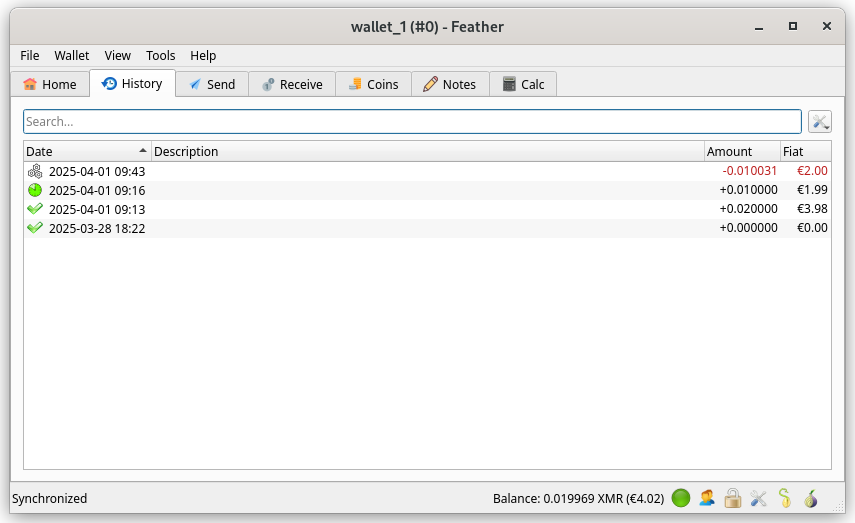
Feather wallet can be used to receive XMR, send XMR, label contacts, manage multiple addresses, and review transaction history. It is also useful for people who need payment proofs. A transaction proof can help show that a payment was made without exposing unrelated wallet activity. That can be important when dealing with support teams, merchants, or personal records, although the other party must understand what proof type is being provided.
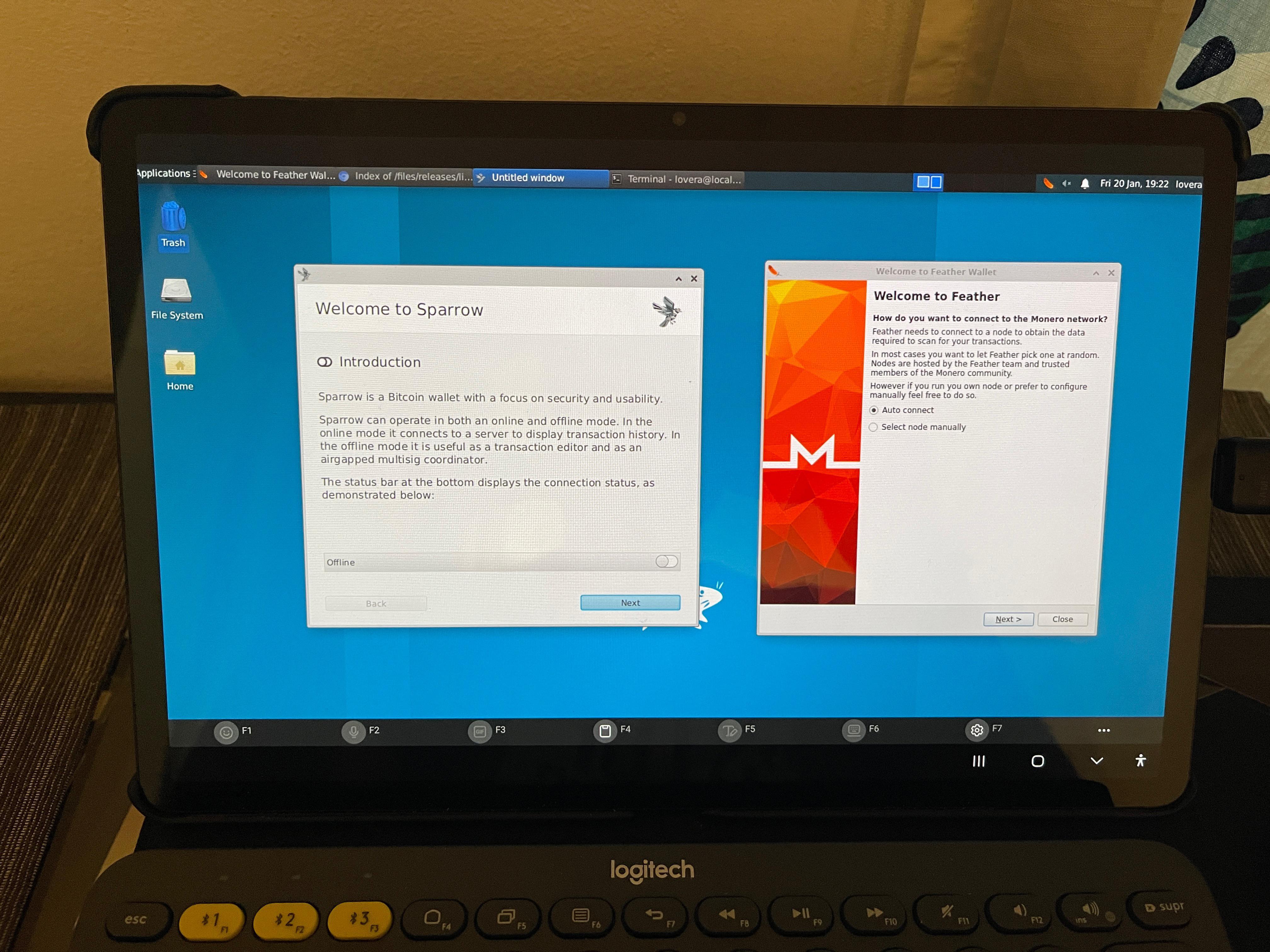
Feather wallet is also practical for desktop privacy workflows. Some users run it on a regular computer for everyday Monero handling. Others use it in Tails, Whonix, virtual machines, or other controlled environments. Feather wallet can route traffic through Tor or use proxy settings, which may be relevant for users who are trying to avoid linking wallet activity to a normal network connection. These tools improve options, but they do not create perfect anonymity by themselves.
Feather wallet can support a more advanced storage pattern too. Offline signing, hardware wallet workflows, view-only wallets, and transaction construction can help separate spending authority from an internet-connected machine. Those setups require more care, because a mistaken transfer file, wrong restore height, or misunderstood unsigned transaction can cause confusion. Still, Feather wallet is often chosen because it exposes advanced Monero features without forcing every user into command-line work.
Is Feather wallet safe to use?
Feather wallet can be safe when it is downloaded from the real project source, verified, kept updated, and used with good key hygiene. The larger risk is often not the wallet code itself but the environment around it: malware on the computer, phishing sites, fake download pages, clipboard replacement, malicious QR codes, weak backups, and rushed payments. A secure wallet on an infected machine can still lead to a bad outcome.
Feather wallet users should treat the seed phrase as the master key. Anyone who gets the seed can restore the wallet and spend the XMR. A wallet password protects the local wallet file, but it is not a replacement for a seed backup, and it cannot protect against every form of malware. Do not type a seed into a website, support chat, browser extension, or unknown app. Real wallet support should never need the seed phrase.
Feather wallet transaction screens should be read carefully before sending. Confirm the address, amount, fee, and any payment ID or integrated address details if a service requires them. QR codes are convenient, but they are still just encoded data; users should review what the wallet filled in after scanning. If a merchant invoice does not update after payment, the useful evidence is usually the transaction ID, transaction proof, amount, destination address, and time, not a promise that funds can be pulled back.
What are the benefits of Feather wallet?
Feather wallet is attractive because it keeps the Monero experience desktop-native and relatively lean. It is not trying to be a trading terminal, browser wallet, NFT gallery, or multi-chain dashboard. For users who only want a serious XMR wallet, that restraint can make the app easier to reason about. Fewer unrelated features can also reduce confusion during sensitive actions such as restoring a wallet or approving a transaction.
Feather wallet offers a useful mix of beginner and advanced features. A new user can create a wallet, receive to a subaddress, and send a normal payment. A more experienced user can choose nodes, route through Tor, verify transaction proofs, inspect details, or work with cold storage patterns. That range is one reason Feather wallet is frequently discussed alongside the official Monero GUI and CLI wallets.
| Need | How Feather wallet helps |
|---|---|
| Everyday XMR sending | Provides a graphical send flow, address book, history, and fee handling. |
| Receiving privately | Makes subaddresses and account organization easier to manage. |
| Network privacy options | Supports Tor, proxy settings, and custom node choices for different threat models. |
| Payment disputes | Can create transaction proofs that help demonstrate a specific payment. |
| Advanced storage | Can fit into view-only, hardware wallet, or offline signing workflows. |
Feather wallet is also small compared with many modern desktop applications. That does not mean every computer will run it perfectly, but the design goal is a compact wallet that works well on normal hardware and privacy-focused operating environments. Users who dislike heavy multi-asset software may appreciate that Feather wallet keeps attention on Monero.
What risks should you understand before sending XMR?
Feather wallet cannot protect a user from every payment mistake. Monero transactions are irreversible once broadcast and confirmed. If the recipient address belongs to a scam site, a fake invoice, or a compromised clipboard entry, the wallet cannot retrieve the funds. This is why users often send a small test amount first when dealing with a new recipient, especially if the transaction is time-sensitive or the service is unfamiliar.
Feather wallet synchronization status matters as well. If the wallet has not fully scanned the relevant blocks, the displayed balance or incoming payment status may be incomplete. A recipient’s system may also lag behind the network or require additional confirmations. When a payment page says it is waiting, that message may reflect the merchant’s backend, the invoice timer, network confirmations, or a wrong address. Feather wallet can show the outgoing transaction, but it cannot guarantee another site will credit it correctly.
Feather wallet users should be especially careful with links. A fake website can imitate a merchant, exchange, forum, or wallet download page. Verifying a domain, bookmark, PGP-signed address, or official mirror is part of crypto hygiene. For downloads, use the project’s official source. For payments, verify the destination using the recipient’s expected process. Do not assume that a polished page, a QR code, or a familiar logo proves legitimacy.
How does Feather wallet compare with other Monero wallets?
Feather wallet is usually compared with the official Monero GUI, the official Monero CLI, and mobile wallets. The official GUI is a strong general choice for many users, while the CLI is preferred by technical users who want scriptable control and direct command-line access. Feather wallet focuses on being a lightweight desktop wallet with advanced features exposed through a cleaner graphical workflow.
Feather wallet is not the same as a mobile wallet. A phone wallet is convenient for small, on-the-go payments, but phones have different security and backup tradeoffs. A desktop wallet can be easier for verifying downloads, managing files, using hardware devices, reading long addresses, and working with transaction proofs. The best wallet depends on the user’s actual pattern: occasional receiving, everyday spending, cold storage, or technical Monero work.
Feather wallet also differs from exchange accounts. An exchange may show an XMR balance, but the exchange controls the withdrawal process and may require identity checks, impose limits, or pause withdrawals. With Feather wallet, the user controls the private keys. That is a major distinction. Self-custody avoids some platform risks, but it also removes the safety net of a customer support team that can reset an account password.
When is Feather wallet a good choice?
Feather wallet is a good fit when a user wants a dedicated Monero desktop wallet with clear controls and room to grow. It can work for someone learning XMR basics, but it also has enough depth for more serious privacy and custody workflows. The interface lowers friction without hiding every important detail, which is useful in a currency where address handling, synchronization, and transaction proof concepts matter.
Feather wallet is less ideal for users who want a custodial account, a multi-coin portfolio tracker, a browser extension for decentralized apps, or a wallet that removes all responsibility. It is also not a guarantee of privacy if the user ignores operational security. Monero, Tor, I2P, hardware wallets, and offline backups are tools. How they are combined matters more than any single product name.
Feather wallet should be approached as serious financial software. Start small, verify the installer, learn how wallet recovery works, and keep the seed phrase offline. Confirm current release details with official sources because wallet versions, operating system requirements, and security recommendations can change. Used carefully, Feather wallet can be a capable way to manage XMR from a desktop environment while keeping the user in control of their own keys.
Questions and Answers
What is Feather wallet used for?
Feather wallet is used to manage Monero on a desktop computer. It lets users create or restore an XMR wallet, receive funds through addresses or subaddresses, send transactions, review history, connect to nodes, and create payment proofs. It is designed for Monero rather than many different cryptocurrencies, so its features are focused on privacy coin workflows and self-custody.
Is Feather wallet an official Monero wallet?
Feather wallet is a free and open-source Monero desktop wallet, but it is separate from the official Monero GUI and CLI wallets. It is commonly discussed in the Monero ecosystem because it uses Monero wallet technology and offers advanced XMR features in a graphical interface. Users should still verify downloads, release signatures, and documentation through official Feather wallet sources before trusting an installer.
Does Feather wallet support Tor or private network routing?
Feather wallet includes privacy-oriented network options such as Tor and proxy support, and it can be configured with different Monero nodes. These features can help users reduce network-level exposure, but they do not guarantee perfect anonymity. The user’s operating system, node choice, browser habits, payment behavior, and address verification practices all affect the real privacy outcome.
Can I recover Feather wallet if my computer is lost?
You can usually recover a Feather wallet if you have the correct seed phrase, and in some cases the right restore details such as wallet type or restore height. If the seed phrase and private keys are lost, recovery may be impossible. Store the seed offline, never share it with support contacts or websites, and test your backup process before keeping significant funds in the wallet.
Why does Feather wallet need to synchronize?
Feather wallet needs to synchronize because Monero wallets scan blockchain data to find outputs that belong to the user. Until the wallet has scanned the relevant blocks, the displayed balance and transaction history may be incomplete. Synchronization time depends on the restore height, node performance, network connection, and device speed, so users should wait for sync before assuming a payment is missing.
Are Feather wallet transactions reversible?
No. Feather wallet creates Monero transactions, and cryptocurrency transfers are generally irreversible once sent and confirmed. If funds are sent to a wrong address, fake invoice, scam service, or compromised payment page, the wallet cannot pull them back. Always review the destination address and amount, verify the recipient through trusted channels, and consider a small test transaction for unfamiliar recipients.
How does Feather wallet compare with the Monero GUI wallet?
Feather wallet and the Monero GUI wallet both help users manage XMR from a desktop interface, but they have different design priorities. Feather wallet emphasizes a lightweight, focused experience with advanced features such as privacy routing options, payment proofs, subaddress management, and workflows familiar to desktop wallet users. The Monero GUI remains a strong general option, especially for users who prefer the reference wallet ecosystem.