Feather wallet Is a Monero desktop wallet for everyday private payments
Feather wallet Is a free, open-source desktop wallet for Monero users who want a lighter graphical alternative to the official Monero GUI and CLI. It stores keys locally, helps users send and receive XMR, connects through Monero nodes, and includes privacy-oriented options such as Tor support, subaddresses, encrypted wallet files, view-only wallets, and advanced transaction controls. It is not a bank, exchange, or guaranteed safety product, so users should verify downloads, back up seeds, and understand Monero risks before relying on it.
Feather wallet is best understood as wallet software rather than a financial service. The application gives you an interface for managing a Monero wallet on Linux, Tails, Windows, or macOS, but it does not custody funds for you. Your seed and private spend key are the important pieces. If those are lost, exposed, or entered into a fake download, the software cannot reverse the damage.
That distinction matters because searches for Feather wallet often mix several intentions. Some users want a fast desktop app, some want a privacy-focused Monero setup, and others want to know whether it is safer than using an exchange wallet. The useful answer is practical: Feather wallet can be a capable self-custody tool when installed carefully and used with good security habits, but it still requires personal responsibility.
What is Feather wallet?
Feather wallet is a graphical Monero wallet designed to feel lighter and more direct than a full reference wallet while still exposing many features experienced XMR users expect. It is built for desktop operating systems and is commonly associated with a compact, Electrum-style workflow: create or restore a wallet, connect to the network, wait for synchronization, then send and receive transactions from a clear interface.
Feather wallet is open source, which means its code can be inspected, built, and discussed by the community. Open source does not automatically make a wallet safe, but it does allow technically skilled users to review how the application handles wallet files, network connections, transaction creation, and integrations. For ordinary users, the practical takeaway is to download only from official sources and check release information before installing.
Feather wallet focuses on Monero rather than trying to support every token. That narrow scope is part of its appeal. Monero has its own address formats, transaction model, ring signatures, stealth addresses, view keys, spend keys, and node behavior. A wallet built specifically around XMR can present those concepts more cleanly than a general multi-coin wallet that treats Monero as one asset among many.
How does Feather wallet work with Monero?
Feather wallet works by creating or opening a local wallet file, scanning the Monero blockchain for outputs that belong to your keys, and building transactions when you decide to spend XMR. The wallet can connect to a remote node, a local node, or a connection path configured for stronger privacy. A node provides blockchain data and broadcasts transactions, while the wallet keeps the sensitive key material under your control.
The protocol behind Monero hides more transaction details than transparent blockchains, but the wallet still needs network access to synchronize and broadcast. Feather wallet therefore has to balance convenience with metadata risk. A remote node is easier because you do not need to store and maintain the whole blockchain. A local node gives more control, but it takes disk space, bandwidth, and patience.
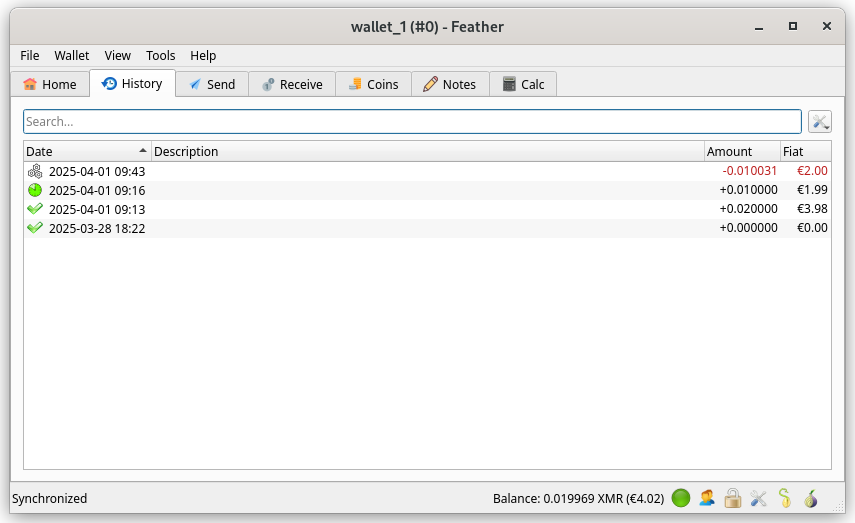
Feather wallet also supports common Monero wallet patterns such as subaddresses, multiple accounts, transaction history, contacts, and address management. Subaddresses are especially useful because they let you receive payments without reusing the same visible address for every purpose. Reusing addresses can create unnecessary linkage, even on a privacy-focused chain, so a wallet that makes subaddresses easy can improve everyday hygiene.
In practice, Feather wallet is not doing anything magical when it protects privacy. It is giving users an accessible way to use Monero's existing design while offering settings that help reduce avoidable leaks. The quality of the setup still depends on where the software came from, how the computer is maintained, what node is used, and how carefully the user handles seeds and transaction details.
Who is Feather wallet for?
Feather wallet is a strong fit for people who want a desktop Monero wallet that is more approachable than command-line tools but more configurable than a minimal mobile wallet. It can suit users who receive occasional XMR payments, hold a modest Monero balance, test privacy workflows, or prefer desktop signing with a larger screen and clearer transaction review.
Feather wallet can also appeal to users who run privacy-focused operating environments. Support for platforms such as Tails is relevant because some Monero users care about reducing the link between wallet activity and a normal daily-use computer. That does not make the setup anonymous by default, and it does not remove the need for operational discipline, but it does make the wallet useful in more careful workflows.
For a new user, Feather wallet may feel less intimidating than the Monero CLI while still teaching important ideas. You will encounter seeds, wallet restore height, node choice, transaction fees, confirmations, and backup discipline. Those details are not busywork. They are the parts of self-custody that determine whether the wallet remains usable after a device fails or an operating system is reinstalled.
Feather wallet is less suitable for someone who wants customer support like a bank, instant password recovery, insured custody, or built-in trading with fiat accounts. A non-custodial Monero wallet puts control on the user's device. That control is the benefit, but it is also the tradeoff.
How to get started with Feather wallet
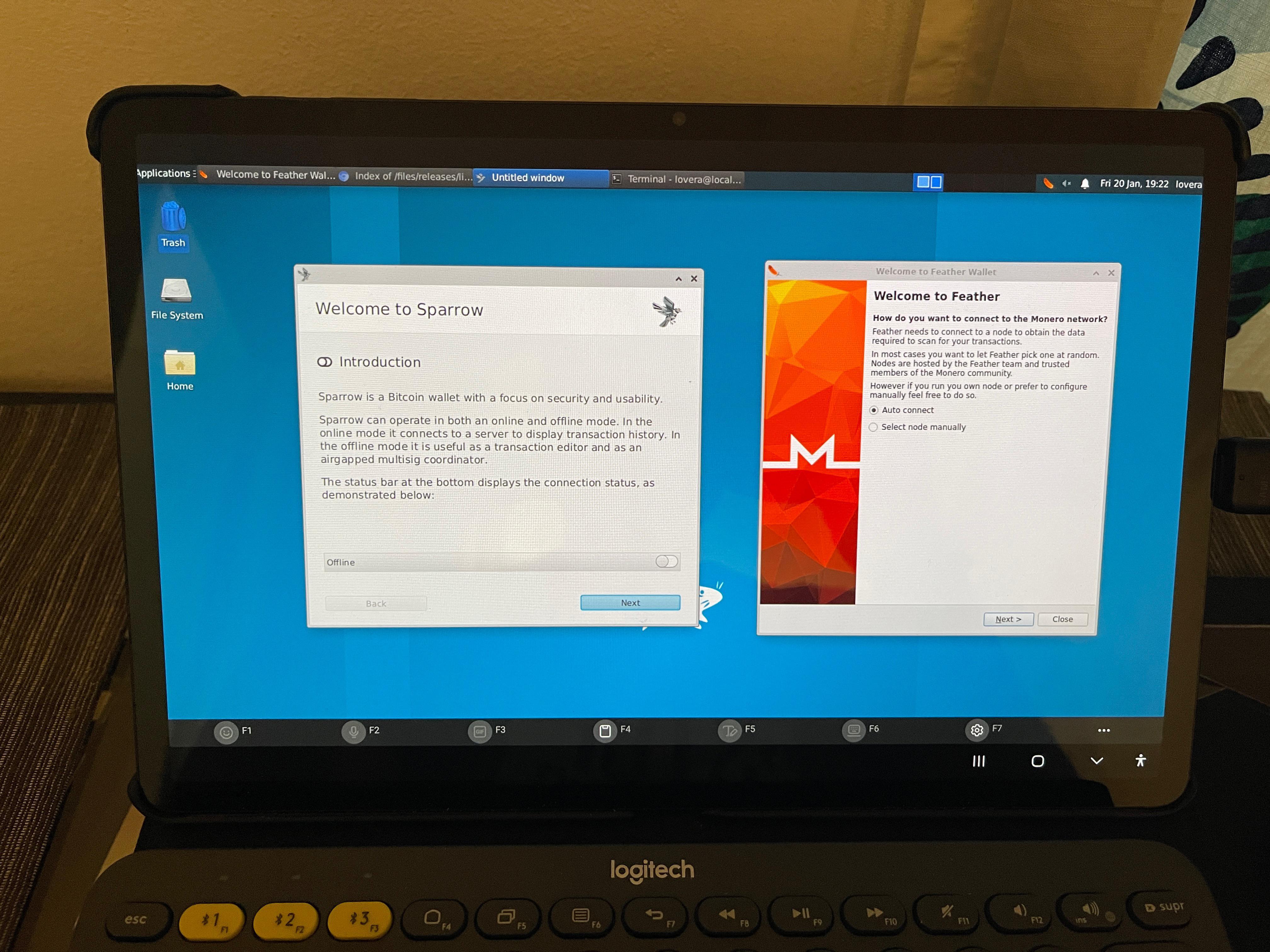
Feather wallet setup should start with source verification, not with clicking the first download result. Search engines, ads, cloned domains, and reposted installers can all be risky in cryptocurrency. The safest habit is to go to the official project source, compare the release details, and use any signature or checksum verification process the project provides. If a step looks unfamiliar, slow down before moving funds.
Feather wallet then asks you to create a new wallet or restore an existing one. A new wallet generates a seed that must be written down and stored offline. A restored wallet uses an existing seed and usually benefits from an accurate restore height, which tells the wallet where in the blockchain it should begin scanning. A restore height that is too early wastes time; one that is too late can miss historical transactions until corrected.
A sensible first workflow looks like this:
- Download Feather wallet from the official project source and verify the release when possible.
- Create a new wallet or restore from a seed in a private environment.
- Record the seed offline and keep it away from cloud notes, screenshots, and email.
- Choose a node connection method that fits your privacy and performance needs.
- Receive a small test amount, wait for confirmations, then practice restoring before storing more value.
Feather wallet users should also learn the difference between the wallet password and the seed. The password protects the local wallet file on that machine. The seed can restore access elsewhere. If the seed is stolen, changing the local password will not protect the funds. If the password is forgotten but the seed is safe, the wallet can usually be restored.
What are the main benefits of Feather wallet?
Feather wallet benefits begin with focus. Because it is centered on Monero, the interface can present XMR-specific features without burying them under unrelated coins, staking screens, NFT tabs, or exchange promotions. That makes the wallet easier to reason about for people who want one tool for one asset.
Feather wallet is also known for being lightweight compared with heavier desktop experiences. A small, responsive wallet matters when users are running it in virtual machines, privacy-oriented live systems, or older hardware. Performance is not only about comfort; it can reduce the temptation to take shortcuts, skip verification, or leave a wallet open longer than needed.
Another benefit is configurability. Feather wallet can work with remote nodes for convenience, but it also supports more careful network setups. Users who understand Tor, proxy settings, local nodes, or view-only arrangements can tune the wallet to their needs. Beginners can stay closer to defaults while they learn, then adjust later as their threat model becomes clearer.
Feather wallet also offers practical features that matter in day-to-day use: encrypted wallet files, contacts, address organization, transaction details, balance hiding, and tools for proving or reviewing payments. These features are not a substitute for good judgment, but they make the desktop workflow smoother.
Is Feather wallet safe?
Feather wallet can be safe for many users when obtained from the correct source, verified, kept updated, and run on a trusted computer. The phrase safe, however, needs context. A wallet can be well designed and still be used unsafely. Malware, phishing, clipboard replacement, fake support messages, weak backups, exposed seeds, and careless downloads are often more dangerous than the wallet code itself.
Feather wallet is non-custodial, so there is no central help desk that can reset your seed or reverse a transaction. Monero transactions are designed to settle on-chain, and mistakes can be permanent. Before sending a large amount, send a small test payment, check the address carefully, and understand the confirmation process. This is risk management, not financial advice.
Feather wallet users should be especially cautious with download warnings and antivirus alerts. Security tools sometimes flag cryptocurrency software because wallets interact with keys, networking, or privacy components, but a warning should never be ignored automatically. Verify the release through official channels, compare hashes or signatures when available, and do not install from mirrors, random file hosts, or social media links.
For higher-value storage, Feather wallet may be part of a broader setup rather than the only control. Some users pair desktop wallets with hardware wallets or separate machines. Others keep a view-only wallet for monitoring and reserve the spend key for a more controlled environment. The right approach depends on the amount at risk, the user's technical ability, and the consequences of loss.
How does Feather wallet compare with other Monero wallets?
Feather wallet sits between the official Monero GUI, the Monero CLI, and simpler mobile wallets. Compared with the CLI, Feather wallet is more approachable because it gives users buttons, screens, transaction tables, and settings instead of commands. Compared with the official GUI, many users look to Feather wallet for a lighter feel and a feature set aimed at both everyday and advanced desktop use.
Feather wallet is not automatically better than every alternative. The official Monero GUI is maintained as part of the reference wallet ecosystem and may be preferred by users who want the most standard path. The CLI remains powerful for advanced operators, servers, automation, and people who are comfortable reading command output. Mobile wallets can be more convenient for small payments, but they involve different device-security tradeoffs.
| Wallet type | Typical strength | Common tradeoff |
|---|---|---|
| Feather wallet | Light desktop interface with Monero-specific controls | Requires careful download verification and desktop security |
| Official Monero GUI | Reference-style graphical experience | Can feel heavier or less streamlined to some users |
| Monero CLI | Advanced control and scripting | Less friendly for beginners |
| Mobile Monero wallet | Convenient small transactions | Phone security and backup habits become critical |
Feather wallet comparisons should also include custody. Leaving XMR on an exchange is not the same as using a wallet. An exchange account may be convenient for buying or selling, but it can involve withdrawal limits, identity checks, account freezes, and counterparty risk. A self-custody wallet gives more control, but it also removes the safety net of account recovery.
What fees and costs should users expect?
Feather wallet itself is generally discussed as free wallet software, but using Monero still involves network fees. Those fees are paid to get transactions included on the network, not to the wallet as a custody service. The exact fee can change based on network conditions, transaction structure, and wallet settings, so users should review the transaction screen before sending.
Feather wallet users may also face indirect costs. Running a local node uses storage, bandwidth, and electricity. Using privacy-focused systems may require time and learning. Hardware wallets, dedicated laptops, backups, and secure storage materials can add expense. Those costs are not mandatory for every user, but they are part of designing a setup that matches the value being protected.
Feather wallet does not eliminate exchange, tax, or compliance questions. If you acquire or sell XMR through a service, that service may have its own fees and rules. Laws differ by jurisdiction and can change. Users should keep their own records and verify legal or tax obligations with qualified sources rather than assuming a wallet feature changes those responsibilities.
What should you check before relying on Feather wallet?
Feather wallet deserves the same caution as any tool that can move irreversible value. Before relying on it, confirm that your device is reasonably clean, your operating system is updated, your seed backup is offline, and your download came from the official project. Then test the full loop: receive, send, close the wallet, reopen it, and understand how restoration would work if the device failed.
Feather wallet users should revisit settings over time. Node availability changes, software versions change, and your own threat model may change. A setup that is acceptable for a small test balance may not be appropriate for savings. A workflow that is convenient on a home desktop may not be appropriate on a shared machine or in a high-risk environment.
Feather wallet is ultimately a practical Monero desktop wallet, not a promise of perfect privacy or guaranteed protection. It can help users manage XMR with a focused interface, strong self-custody assumptions, and useful privacy options. The best results come from combining the software with verification, careful backups, modest testing, and a clear understanding that crypto transactions and wallet security carry real risk.
Questions and Answers
What is Feather wallet used for?
Feather wallet is used to create, restore, send, receive, and manage Monero on a desktop computer. It is a non-custodial wallet, so the user controls the seed and keys rather than relying on an exchange account. It is designed for XMR-specific workflows such as subaddresses, node connections, encrypted wallet files, and privacy-oriented settings.
Is Feather wallet an official Monero wallet?
Feather wallet is a separate open-source Monero desktop wallet, not the same thing as the official Monero GUI or CLI. It is built for Monero users and aims to provide a lightweight graphical experience with advanced features. Users who prefer the reference wallet ecosystem may choose the official GUI or CLI instead.
Is Feather wallet safe for storing Monero?
Feather wallet can be safe when downloaded from the official source, verified when possible, kept updated, and used on a trusted computer. The biggest risks often come from fake downloads, exposed seeds, malware, weak backups, and mistaken transactions. Because it is non-custodial, there is no central recovery service if the seed is lost or stolen.
Does Feather wallet require running a Monero node?
Feather wallet can connect to remote nodes, which is convenient because the user does not need to store the whole blockchain. Users who want more control can use a local node or more private network settings. The right choice depends on privacy expectations, disk space, bandwidth, and technical comfort.
Can beginners use Feather wallet?
Beginners can use Feather wallet, but they should learn the basics before moving meaningful value. Important topics include seed backups, restore height, transaction confirmations, node selection, and download verification. A small test transaction and a practice restore are sensible first steps because Monero transactions are irreversible and wallet recovery depends on the seed.
How does Feather wallet compare with the Monero GUI wallet?
Feather wallet is often chosen by users who want a lighter desktop interface with many Monero-specific controls. The official Monero GUI may appeal to users who prefer the reference wallet path. Neither option removes the need for secure backups, clean devices, and careful transaction review, so the better choice depends on workflow and comfort level.
Does Feather wallet make Monero transactions completely anonymous?
Feather wallet helps users access Monero privacy features and can support privacy-oriented connection settings, but no wallet should be treated as a guarantee of complete anonymity. Network metadata, device security, exchange records, address handling, and user behavior all matter. Users should verify current documentation and understand their own risk model before relying on any privacy claim.