Feather wallet Is a desktop Monero wallet setup guide
Feather wallet Is a free, open-source desktop wallet for Monero users who want a focused way to send, receive, and manage XMR from a computer. It is built for Windows, macOS, Linux, and privacy-oriented environments such as Tails, with a practical interface for everyday payments and enough advanced settings for users who care about nodes, Tor, subaddresses, wallet files, and transaction details.
Feather wallet is not a bank, exchange, investment service, or multichain portfolio app. It is a non-custodial Monero wallet, which means the user controls the wallet keys and accepts the responsibility that comes with them. For anyone comparing desktop options, Feather wallet sits between the official Monero GUI, the command-line wallet, and mobile wallets: it aims to be lighter and faster than a full-node setup while still exposing serious Monero features.
What is Feather wallet?
Feather wallet is a desktop application designed specifically for Monero, the privacy-focused cryptocurrency usually represented by the ticker XMR. Instead of trying to support every token, NFT, staking product, browser extension, or DeFi network, Feather wallet concentrates on one job: helping users create, restore, synchronize, and use a Monero wallet with a clear graphical interface.
Feather wallet is open-source software, so its code can be reviewed by technically capable users and community contributors. That does not automatically make any wallet risk-free, but it does make the project more transparent than a closed application that asks users to trust invisible behavior. Users should still download only from official project channels, verify release information when possible, and be cautious about ads, clones, and unsolicited links.
Feather wallet is also a wallet file manager in the practical sense. A Monero wallet contains keys, restore data, transaction history, and local settings. Feather wallet helps create that wallet, protect it with a password, connect it to the Monero network through a node, and prepare transactions. The Monero itself is not stored inside the app; the wallet controls the keys that allow spending from addresses recorded on the Monero blockchain.
How does Feather wallet work with Monero?
Feather wallet works by combining a local wallet interface with Monero network access. When a user opens a wallet, the application scans the chain data available through the selected node to identify incoming payments, outgoing transactions, and current spendable balance. This scanning process can take time after restoration because Monero wallets need to examine relevant blocks without revealing a simple public account balance the way many transparent blockchains do.
Feather wallet uses the same basic Monero concepts users will see in other serious XMR tools: a seed or restore phrase, private spend keys, private view keys, public addresses, subaddresses, transaction fees, confirmations, and wallet synchronization. A new user does not need to master all of those terms on day one, but understanding them reduces mistakes. The seed is especially important because it can restore control of funds if the computer is lost, but it can also let someone else steal funds if exposed.
Feather wallet can connect through remote nodes, local nodes, and privacy-conscious network routes depending on how the user configures it. A remote node is convenient because the user does not have to store and maintain the full Monero blockchain locally. A local node can offer stronger independence but requires more storage, bandwidth, and maintenance. Feather wallet gives users room to choose the balance that fits their threat model.
The protocol details behind Monero include ring signatures, stealth addresses, confidential transactions, and dynamic fees. Feather wallet does not require a user to manually assemble those privacy features, but it does help present the results in a usable desktop workflow. In practice, Feather wallet is a bridge between Monero's privacy design and the actions a normal user needs: creating an address, checking confirmations, sending XMR, and keeping records organized.
Who is Feather wallet best for?
Feather wallet is best for desktop users who already know they want a Monero wallet or are learning Monero from a privacy and self-custody perspective. It can suit people who receive XMR for personal payments, move funds from an exchange into a self-custody wallet, maintain separate subaddresses for organization, or need a wallet that runs comfortably on lightweight systems.
Feather wallet may also appeal to users who dislike heavy, generalized crypto apps. Many wallet products are designed around trading, token discovery, web3 pop-ups, or portfolio dashboards. Feather wallet is narrower. That narrowness can be a strength when the user's actual goal is to manage Monero rather than browse unrelated chains. For background reading on wallet types, a related can help explain where XMR-specific tools differ from general crypto wallets.
Feather wallet is not ideal for someone who wants a mobile-first app, a custodial account with password recovery, direct bank purchases, or support for Bitcoin, Ethereum, stablecoins, and other assets in one interface. Those needs point to different categories of software. Feather wallet is also not a way to avoid tax, legal, or compliance obligations; users are responsible for understanding the rules that apply to their location and activity.
How to get started with Feather wallet
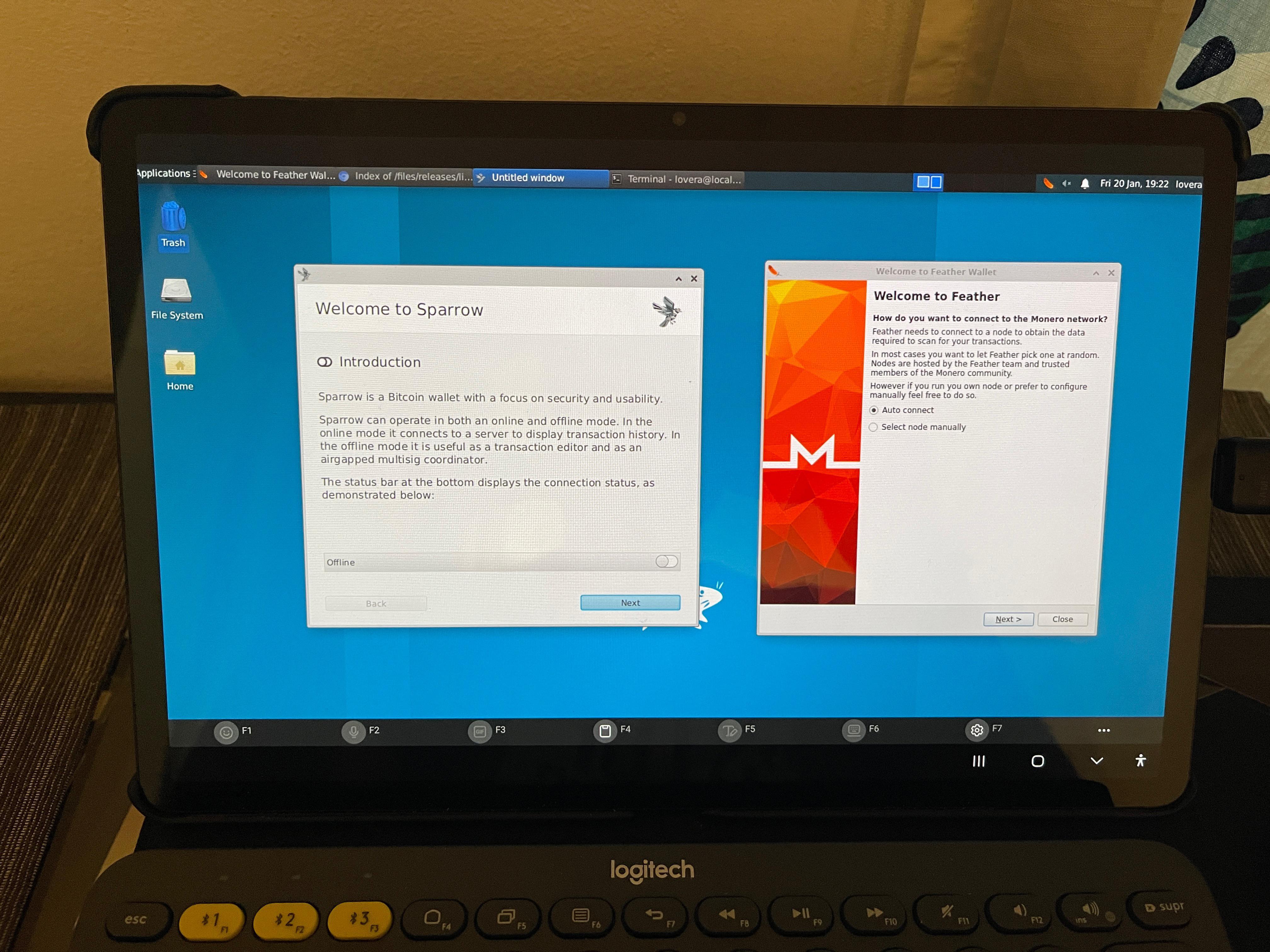
Feather wallet setup should start with source verification, not with speed. Search results and social posts can lead to lookalike domains, outdated builds, or malicious downloads. The safest habit is to navigate to the official project source, compare release details, and avoid installers shared through direct messages or random mirrors. If checksum or signature verification is available for the version being installed, users with the ability to verify should do so.
Feather wallet installation is usually straightforward once the correct build is selected for the operating system. Windows users commonly work with an installer or portable build, macOS users may need to approve the app through system security settings, and Linux users may choose from available packages or portable formats. Tails users should pay close attention to persistence, because data saved in a live environment may disappear unless configured correctly.
Feather wallet onboarding typically follows a simple flow:
- Download Feather wallet from the official project source and check that the version matches current release information.
- Create a new wallet or restore an existing Monero wallet from a valid seed.
- Write the seed backup offline and keep it away from screenshots, cloud drives, email, and chat apps.
- Set a strong wallet password for the local wallet file on the computer.
- Choose a node connection, wait for synchronization, and confirm the wallet shows the expected status.
- Send a small test transaction before relying on Feather wallet for larger transfers.
Feather wallet users should treat the first setup as a security event, not just a software install. The seed is the real recovery method. A password protects the local wallet file, but it does not replace the seed. If the seed is lost and the wallet file becomes unusable, funds may be unrecoverable. If the seed is copied by malware, a camera, a shared printer, or another person, funds can be spent without permission.
Sending and receiving XMR with Feather wallet
Feather wallet makes receiving Monero centered around addresses and subaddresses. A user can generate a receiving address, label it for context, and share it with the payer. Subaddresses are useful because they help separate payments by purpose without requiring a completely separate wallet. For example, a user might create one subaddress for a marketplace payout, one for a friend, and another for testing.
Feather wallet sends XMR through a transaction screen where the user enters a recipient address, amount, and optional details. Before broadcasting, the user should check the address carefully, review the fee, and confirm that the wallet is synchronized. Monero transactions are irreversible once accepted by the network, so there is no chargeback button or support desk that can pull back a mistaken payment.
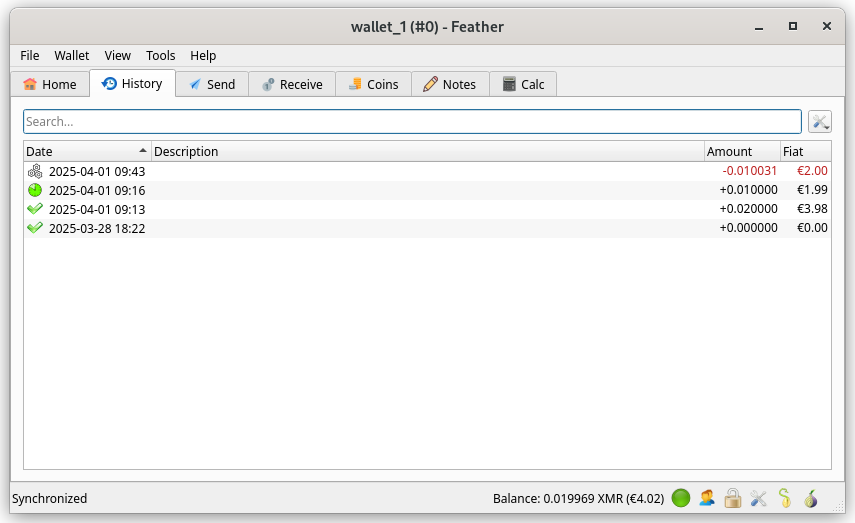
Feather wallet will usually show transaction status as the payment moves from creation to network broadcast and then toward confirmations. Confirmations matter because they reduce uncertainty that a transaction is final enough for the intended use. A user sending to an exchange should also follow that exchange's current deposit instructions, because exchanges may require a certain number of confirmations or have address policies that change over time.
Feather wallet can be used for small test transfers, routine personal payments, and controlled self-custody storage. It should not be treated as an investment recommendation or as proof that Monero is appropriate for a particular financial situation. Cryptocurrency prices, network conditions, regulations, and wallet software can change. Verify current details with official sources before sending funds, especially when updating software or moving meaningful amounts.
Is Feather wallet safe?
Feather wallet can be a reasonable choice for users who understand self-custody, but safety depends heavily on the user's operating system, download habits, backups, and threat model. No desktop wallet can fully protect funds on a compromised computer. If malware can read the screen, alter clipboard contents, capture keystrokes, or access wallet files, the user may be at risk regardless of which wallet interface is installed.
Feather wallet includes security-oriented features such as encrypted wallet files, node configuration, address management, and options useful to privacy-focused users. However, these features work best alongside disciplined behavior. Keep the operating system updated, avoid installing unknown browser extensions, be suspicious of copied addresses changing in the clipboard, and separate high-risk browsing from wallet activity when possible.
Feather wallet backups deserve special care. A seed phrase should be written on paper or another durable offline medium and stored where fire, theft, and accidental disposal are considered. Digital photos of a seed are convenient but dangerous. Cloud storage, password managers, and encrypted drives may be acceptable for some advanced users with a strong model, but beginners should understand that online copies expand the attack surface.
Feather wallet users should also be careful with updates. A genuine update can fix bugs or improve compatibility, while a fake update can be a direct theft attempt. Before installing a new build, check the official project channel, read release notes, and avoid pressure tactics. Antivirus warnings and operating system prompts should be investigated rather than ignored, but they should be interpreted through official release information instead of panic.
Feather wallet benefits and tradeoffs
Feather wallet has clear benefits for people who want a focused Monero desktop experience. It is comparatively lightweight, purpose-built, open source, and comfortable for users who want more detail than a simplified mobile wallet provides. Feather wallet can expose advanced controls without forcing every user into the command line, which is one reason it is often discussed alongside the official Monero GUI and CLI wallets.
Feather wallet also has tradeoffs. A desktop wallet is only as portable as the computer it runs on, and it is not as convenient as a phone wallet for point-of-sale payments. A remote node can reduce setup burden but introduces trust and metadata considerations. A local node improves independence but requires resources. Feather wallet lets users choose, but it cannot make the underlying tradeoffs disappear.
Feather wallet is Monero-specific, which is both a benefit and a limit. Users who want a clean XMR workflow may appreciate that the interface is not crowded by unrelated chains. Users who want one app for Bitcoin, Lightning, Ethereum, Solana, NFTs, and stablecoins will need something else. A broader may be more useful for comparing multichain tools with specialized wallets.
| Need | How Feather wallet fits |
|---|---|
| Dedicated Monero use | Strong fit because Feather wallet focuses on XMR rather than multichain features. |
| Mobile payments | Limited fit because Feather wallet is a desktop wallet, not a phone app. |
| Advanced privacy settings | Good fit for users willing to learn node, Tor, and synchronization choices. |
| Beginner custody recovery | Mixed fit because self-custody requires careful seed backup and personal responsibility. |
Feather wallet compared with other Monero wallet options
Feather wallet is commonly compared with the official Monero GUI, the official Monero CLI, and mobile Monero wallets. The official GUI is a broad reference option with full-node capabilities and a familiar graphical design. The CLI is powerful and scriptable but less welcoming to non-technical users. Feather wallet aims for a practical middle ground: graphical, lightweight, and detailed enough for more demanding desktop use.
Feather wallet may feel easier than the command line for everyday send-and-receive activity. It may also feel leaner than a full graphical suite for users who want quick access to transaction history, subaddresses, contacts, node controls, and wallet files. The right choice depends on the user rather than on a universal ranking. A person who values official reference software may prefer the Monero GUI, while a person who values a compact desktop workflow may prefer Feather wallet.
Feather wallet should not be compared only by interface screenshots. Users should consider update frequency, build verification, operating system support, hardware wallet needs, node preferences, documentation, and community review. Wallet choice is a security decision, so convenience should matter, but it should not be the only factor. Before moving significant funds, test restoration and small payments in the exact setup you plan to use.
Common mistakes to avoid with Feather wallet
Feather wallet mistakes often come from treating a privacy wallet like an ordinary web account. There is no standard password reset for lost self-custody funds. There is no central customer service team that can reverse a transaction. There is no safe reason to type a seed phrase into a random website that claims to verify or upgrade a wallet. Feather wallet should be used with the assumption that the seed must remain private forever.
Feather wallet users also sometimes underestimate synchronization. If a restored wallet appears empty before it has scanned from the correct restore height, the balance may simply not be visible yet. Setting an approximate restore height from before the wallet's first transaction can reduce scanning time while still finding relevant activity. If uncertain, a more conservative earlier height may take longer but avoids missing history.
Feather wallet address handling deserves patience. Monero addresses are long, and copying them incorrectly can ruin a transaction. Use labels, verify the first and last characters, and send a small test when the recipient or setup is new. When sending to an exchange or service, follow its current deposit page exactly, because wallet-side confidence does not fix a service-side policy mistake.
Feather wallet as part of a sensible Monero setup
Feather wallet is most effective when it is part of a broader custody routine. That routine includes clean downloads, offline backups, careful updates, a realistic node choice, and small test transactions. The software can make Monero easier to use, but the user still needs to understand what self-custody means. Privacy tools reward patience and punish shortcuts.
Feather wallet is a strong candidate for someone who wants a desktop Monero wallet with practical controls and a focused purpose. It is not the only valid choice, and it is not a guarantee of privacy or safety by itself. Used carefully, Feather wallet can support everyday XMR receiving, sending, labeling, restoring, and monitoring while keeping the experience more approachable than a purely command-line workflow.
Feather wallet should be evaluated with current official information before installation because software versions, operating system support, and recommended verification steps can change. For new users, the best path is cautious and simple: learn the basics, secure the seed, synchronize fully, test with a small amount, and only then rely on Feather wallet for regular Monero activity.
Questions and Answers
What is Feather wallet used for?
Feather wallet is used to create, restore, send, receive, and manage Monero on a desktop computer. It is a non-custodial XMR wallet, so the user controls the keys instead of relying on an exchange account. It is best for people who want a focused Monero wallet with address management, transaction history, node settings, and privacy-oriented desktop workflow.
Is Feather wallet only for Monero?
Yes, Feather wallet is built specifically for Monero rather than broad multichain use. That focus can be helpful for users who want a clean XMR wallet without unrelated token, NFT, or web3 features. If you need Bitcoin, Ethereum, stablecoins, or many chains in one app, a general desktop crypto wallet may be a better match.
Is Feather wallet safe for beginners?
Feather wallet can be used by beginners, but it still requires self-custody discipline. The most important step is protecting the seed phrase offline and downloading the app only from official project sources. Beginners should start with small test transactions, keep their computer secure, avoid seed entry on websites, and verify current setup guidance before moving meaningful funds.
Does Feather wallet require running a full Monero node?
Feather wallet does not necessarily require the user to run a full local Monero node. Users can connect through remote nodes for convenience or use a local node for more independence and control. Each choice has tradeoffs involving privacy, storage, bandwidth, and trust, so users should choose based on their threat model and technical comfort.
Can Feather wallet restore an existing Monero wallet?
Feather wallet can restore a compatible Monero wallet when the user has the correct seed or recovery information. During restoration, the wallet may need to scan the blockchain from an appropriate restore height to find past transactions. If the wallet appears empty too early, synchronization or restore height settings may be the issue rather than lost funds.
What should I check before downloading Feather wallet?
Before downloading Feather wallet, confirm that you are using official project sources, check the current release details, and avoid links from ads, direct messages, or unfamiliar mirrors. If signatures or checksums are provided and you know how to use them, verification is a smart step. Wallet software handles private keys, so source verification matters.
How is Feather wallet different from an exchange account?
Feather wallet is a self-custody desktop wallet, while an exchange account is a custodial service that holds assets on behalf of users. With Feather wallet, the user controls the seed and is responsible for backup, security, and transactions. With an exchange, account recovery may be easier, but withdrawals, freezes, identity checks, and custody risk depend on the platform.