Feather wallet guide Is a practical setup and safety overview
Feather wallet guide Is a clear introduction to using Feather Wallet, a desktop wallet commonly associated with Monero, for receiving, storing, and sending XMR with more control than a custodial exchange account. The core idea is simple: install the wallet from official sources, protect the recovery seed, understand node connections, test with small amounts, and verify every transaction detail before approving it.
Feather wallet guide readers are usually trying to answer two questions at once. They want to know how the wallet works, and they want to know what can go wrong if setup is rushed. A wallet does not remove the risk of cryptocurrency use, but it can give a careful user stronger control over keys, transaction privacy settings, address handling, and day-to-day workflow.
What is Feather Wallet used for?
Feather wallet guide coverage starts with the basic purpose of the software. Feather Wallet is a non-custodial desktop wallet designed for people who want to manage Monero rather than leave coins on an exchange. Non-custodial means the user is responsible for the keys and recovery information. That responsibility is powerful, but it is also unforgiving if backups are lost or shared.
Feather wallet guide topics often include receiving XMR, creating invoices, choosing a node, restoring from a seed, reviewing transaction history, and using wallet labels to stay organized. It is not a bank account, a brokerage account, or a guaranteed safe place for funds. It is software that helps a user interact with the Monero network through a local interface.
For a new user, the most important distinction is between owning coins and controlling access to coins. Feather wallet guide basics should make clear that the wallet does not physically contain currency. It stores or derives the keys needed to authorize transactions on the network. Anyone who gains the recovery seed or private keys may be able to move the funds.
How does Feather wallet guide setup usually work?
Feather wallet guide setup begins before the first transaction. A careful user verifies they are downloading the wallet from an official project source, checks the platform version, and avoids search-result ads or third-party download mirrors. This matters because wallet malware often imitates legitimate crypto tools and tries to capture seeds during setup.
Feather wallet guide steps are easiest when treated as a sequence rather than a race. After installation, the user creates a new wallet or restores an existing one, records the recovery seed offline, confirms the wallet opens correctly, and waits for synchronization. If a remote node is used, the wallet can connect without downloading the full blockchain, but the user should understand what information the node may see.
In practice, a basic Feather wallet guide workflow looks like this:
- Download the wallet only from a trusted official source and confirm the operating system version.
- Create a new wallet, write the recovery seed on paper, and store it away from cameras or cloud storage.
- Choose a node connection that matches the user’s privacy and convenience needs.
- Receive a small test amount before moving larger balances.
- Send a small test transaction and review the address, amount, fee, and confirmation status.
Feather wallet guide setup should also include a simple recovery rehearsal. The user does not need to move funds to practice, but they should understand where the seed is stored, what restore height means in a Monero wallet context, and how they would regain access after a computer failure. A backup that has never been checked is only an assumption.
Is Feather Wallet safe for beginners?
Feather wallet guide safety depends less on a single feature and more on user behavior. The wallet can support a responsible self-custody routine, but it cannot protect someone who saves the seed in email, installs a fake update, ignores address verification, or signs a transaction they do not understand. Beginners can use it, but they should begin with modest amounts and slow habits.
Feather wallet guide safety language must be direct because cryptocurrency mistakes are often permanent. If funds are sent to the wrong address, stolen through malware, or lost because the seed is destroyed, there may be no central support desk able to reverse the result. Users should verify current security guidance with official project materials before depending on any wallet for meaningful value.
The protocol behind Monero is built around privacy-focused transactions, but wallet privacy is not automatic perfection. Feather wallet guide readers should know that operating system security, network choice, browser habits, exchange withdrawal records, and personal record keeping can all affect practical privacy. A good wallet is one layer in a broader security model.
Seed phrase and password basics
Feather wallet guide advice should separate the seed from the wallet password. The password protects the local wallet file on a device, while the recovery seed is the deeper backup that can restore access. A strong password is useful, but it does not replace a carefully stored seed. Likewise, a seed stored online can defeat many other security precautions.
Device and malware risks
Feather wallet guide readers should treat the computer as part of the wallet system. A compromised desktop can record keystrokes, replace copied addresses, or display misleading transaction information. Keeping the operating system updated, avoiding pirated software, scanning suspicious files, and using a dedicated profile or machine for wallet activity can reduce common risks.
What are the main benefits of using Feather Wallet?
Feather wallet guide benefits usually begin with control. A user can hold their own keys, generate receiving addresses, label transactions, and decide when to broadcast payments. This differs from keeping XMR on a custodial platform, where account access, withdrawal limits, regional policy, and platform solvency may affect the user’s ability to move funds.
Feather wallet guide users may also value a desktop interface that exposes practical wallet details without requiring command-line use. For people who want more visibility than a mobile wallet but less maintenance than running every component manually, a dedicated desktop wallet can be a workable middle ground. The right choice depends on the user’s threat model and technical comfort.
Another benefit is workflow consistency. Feather wallet guide habits such as labeling incoming payments, saving transaction notes locally, checking confirmations, and separating small spending balances from long-term holdings can make crypto use less chaotic. Organization does not create profit or safety by itself, but it reduces avoidable confusion when reviewing payments later.
How do receiving and sending transactions work?
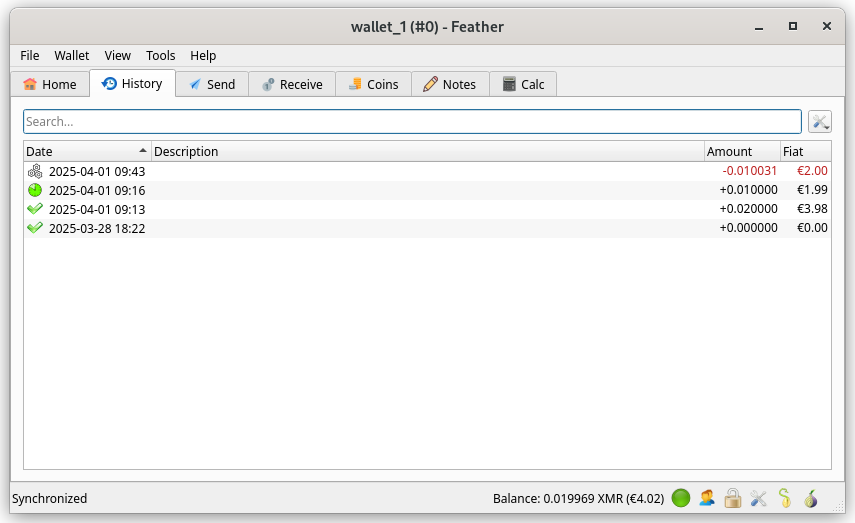
Feather wallet guide transaction basics start with receiving. The wallet can generate addresses or payment details that the sender uses to transfer XMR. The receiver should confirm they are sharing the correct address and should avoid relying on screenshots when exact copyable text is available. After broadcast, the transaction needs network confirmations before it should be considered settled for practical purposes.
Feather wallet guide sending steps require even more attention. Before pressing send, the user should inspect the destination address, amount, fee level, and any optional payment details. Clipboard replacement malware is a known crypto risk, so comparing the first and last characters of an address is a minimum habit, not a complete guarantee.
Feather wallet guide users should also understand that transaction fees can vary based on network conditions and wallet settings. Monero fees are generally handled inside the wallet flow, but the user still needs to review the final amount and avoid assuming that every transaction will confirm instantly. Delays can happen for ordinary network reasons.
What should users know about nodes, sync, and privacy?
Feather wallet guide discussions often mention nodes because a wallet needs blockchain data to show balances and prepare transactions. A local node may offer stronger independence but requires disk space, bandwidth, and maintenance. A remote node is easier, yet it introduces trust and metadata considerations. The practical decision is a balance between privacy, convenience, and technical resources.
Feather wallet guide readers should learn the difference between wallet synchronization and transaction confirmation. Syncing lets the wallet scan relevant blockchain data and display the correct state. Confirmation is about a transaction being included and buried in the chain. A wallet can be open and usable while still catching up, so users should wait until the balance and status are fully current before making decisions.
The privacy model is also affected by network routing. Feather wallet guide material should encourage users to verify current recommendations for Tor, remote nodes, and official configuration options before relying on them. Privacy tools change over time, and a setting that sounds private may not be enough if the surrounding device or account history reveals the user’s identity.
How does Feather Wallet compare with other wallet options?
Feather wallet guide comparisons are most useful when they focus on tradeoffs rather than declaring one wallet best for everyone. A full-node command-line setup may offer maximum control for advanced users, but it can be intimidating. A mobile wallet may be convenient for small everyday balances, but mobile devices can be easier to lose and harder to audit.
Feather wallet guide positioning is often strongest for desktop users who want a dedicated Monero wallet with practical controls and a clearer interface than raw command-line tools. Hardware wallet support, if used, can change the security model by keeping signing keys isolated, but users still need to confirm compatibility, firmware status, and the exact transaction approval flow.
Custodial exchanges are a different category. Feather wallet guide readers should understand that an exchange account may be useful for buying or selling, but it is not the same as self-custody. Exchanges can freeze withdrawals, require identity checks, change regional access, or suffer operational problems. Self-custody removes some platform risks while adding personal backup and device risks.
| Option | Typical strength | Main caution |
|---|---|---|
| Feather Wallet desktop setup | More user control and practical wallet tools | Requires careful seed and device security |
| Mobile wallet | Convenient for small spending balances | Phone loss and app-source risks matter |
| Full-node advanced setup | Greater independence and verification | More storage, bandwidth, and maintenance |
| Custodial exchange | Simple buying and selling workflow | User does not fully control withdrawals or keys |
What mistakes should a Feather wallet guide help prevent?
Feather wallet guide content is most valuable when it prevents routine mistakes. The biggest errors are rarely dramatic at first: downloading from an imitation site, skipping seed backup, storing screenshots of recovery words, sending a large first transaction, or assuming a password alone can restore funds. These are avoidable with a slower setup process.
Feather wallet guide safety also includes social engineering. No legitimate helper needs a recovery seed to troubleshoot a wallet. Anyone asking for seed words, private keys, remote desktop access, or a signed message the user does not understand should be treated as a serious risk. Support conversations should never require exposing the secret that controls funds.
Another common mistake is mixing financial speculation with wallet setup. Feather wallet guide readers should separate operational learning from investment decisions. Knowing how to use a wallet does not mean XMR or any cryptocurrency is suitable for a person’s finances. Prices can be volatile, regulations can change, and users should avoid risking money they cannot afford to lose.
How can a new user build a reliable daily workflow?
Feather wallet guide habits should be boring, repeatable, and documented. A new user can keep a small wallet balance for learning, maintain an offline seed backup, update software only after checking official release information, and record enough local notes to understand why transactions were made. The goal is not complexity; it is reducing surprises.
Feather wallet guide routines become easier with separation. One wallet can be used for small active payments, while long-term storage can use a more conservative setup, potentially with hardware wallet involvement where supported and appropriate. Users should avoid creating so many wallets that backups become confusing, but separating risk by purpose can be helpful.
For related reading, a beginner may benefit from an internal before moving funds, and a more focused before storing larger balances. Feather wallet guide learning works best when practical setup and security thinking develop together.
When does Feather Wallet make sense, and when should users wait?
Feather wallet guide recommendations should leave room for caution. Feather Wallet may make sense for someone who specifically wants a Monero desktop wallet, is willing to manage backups, and understands that self-custody is a responsibility rather than a convenience feature. It may not be suitable for someone who cannot safely store a seed or who needs reversible payments.
Feather wallet guide readers should wait before moving meaningful value if they are unsure where the seed is, whether the download is authentic, how restore height works, or how to recognize a completed transaction. A small test workflow is not wasted time. It is the cost of learning before mistakes become expensive.
Feather wallet guide closing advice is simple: verify current details with official sources, keep recovery information offline and private, test everything with small amounts, and treat every transaction as final. Feather Wallet can be a useful tool for Monero self-custody, but the safest result comes from careful habits, realistic risk awareness, and patient setup rather than blind confidence.
Questions and Answers
What is Feather Wallet used for?
Feather Wallet is commonly used as a desktop wallet for managing Monero. It helps users receive, store, and send XMR while controlling their own wallet keys instead of relying entirely on a custodial exchange. A Feather wallet guide should explain setup, seed backup, node choices, synchronization, transaction review, and recovery basics so beginners understand both the workflow and the responsibility of self-custody.
Is Feather Wallet safe for beginners?
Feather Wallet can be usable for beginners who take security seriously, start with small amounts, and follow official setup guidance. The main risks come from fake downloads, malware, lost seed phrases, copied-address attacks, and misunderstanding irreversible transactions. Beginners should verify the software source, keep the recovery seed offline, protect the computer, and avoid moving meaningful funds until they have tested receiving and sending.
Does Feather Wallet hold my cryptocurrency for me?
No. A non-custodial wallet such as Feather Wallet does not hold funds like a bank or exchange account. It manages the keys needed to authorize transactions on the Monero network. That gives the user more control, but it also means backup and recovery are the user’s responsibility. If the seed is lost or stolen, there may be no way to reverse the damage.
Why does Feather Wallet need to sync?
Feather Wallet needs blockchain data to identify relevant transactions and show an accurate balance. Syncing is the process of scanning network data so the wallet can update its view. This is different from transaction confirmation, which refers to a payment being included in the blockchain. Users should wait for the wallet to finish syncing before relying on displayed balances or making important transaction decisions.
Should I use a local node or a remote node with Feather Wallet?
A local node can offer stronger independence because the user verifies more data directly, but it requires more storage, bandwidth, and maintenance. A remote node is easier and faster to start with, yet it can introduce privacy and trust considerations. The right choice depends on technical comfort, threat model, and current official recommendations. Users should verify node guidance before relying on a setup.
What is the most important backup for Feather Wallet?
The recovery seed is the most important backup because it can restore access to the wallet if the computer is lost, damaged, or replaced. It should be written down offline and stored where it cannot be photographed, copied, or accidentally discarded. A wallet password protects the local wallet file, but it is not a substitute for a correctly stored recovery seed.
Can Feather Wallet transactions be reversed?
Cryptocurrency transactions generally should be treated as final once broadcast and confirmed. If a user sends XMR to the wrong address, approves a fraudulent payment, or loses funds through stolen recovery information, there may be no central authority that can reverse the transaction. A careful Feather wallet guide workflow uses small test payments, address checks, and slow confirmation before larger transfers.